Beaches on the Costa Tropical
It’s high summer, and every week we try to schedule one day when we can disconnect from work and seek out the cooler temperatures of the coast. We love a day at the beach. It is an opportunity to zone out, actually read a book, snooze when the mood takes and forget about everything else.
Our work lives have become increasingly hectic, and a lot of our week is taken up driving here and there looking at properties or showing clients around properties. The remaining time is filled with admin, marketing, design and editing and catching up with enquiries. We don’t get much time to ourselves, such is the down-side of working from home, but it’s all very fulfilling. However, being so busy, it is necessary to take some time to regroup and in the summer the beach calls!
Guests often ask us for directions to the nearest beach, and it is important to remember that we don’t live right on the coast! It takes us an hour to drive to Playa de Granada which, geographically, is the closest, but when you plan on spending all day there then a drive really isn’t too much of a chore.
We are lucky that, through our work, we get to explore some corners of Andalucia that we might normally overlook and there is no doubting that we have discovered some lovely beaches as a result of our travels.
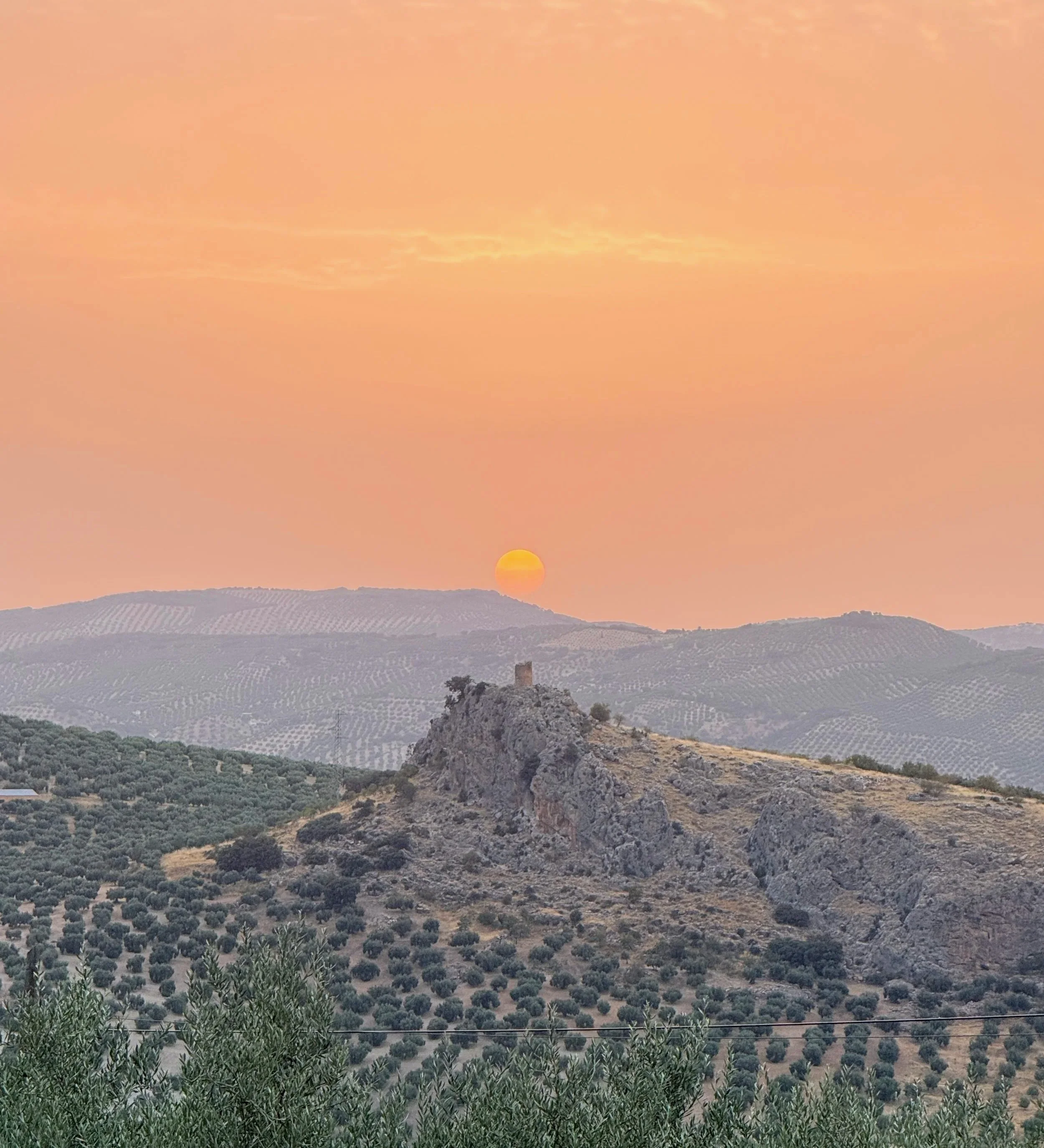
We have, on our social media channels, talked a great deal about a village called Gualchos, which is about 7 kms inland from Granada’s Costa Tropical. We love Gualchos! It is a very traditional Spanish village set on the slopes of the hills that sweep up from the sea towards the Contraviesa mountains and the Alpujarras beyond. It is surrounded by rugged countryside, but to the south there are the most incredible views out to sea. Gualchos is also the name of the municipality that includes the coastal town of Castell de Ferro. This stretch of coastline is still remarkably undiscovered and yet it has so much to offer in terms of charm, realness, and a distinct lack of tourism.
Recently, we have been taking to the water by boat, and seeing the coast from the sea gives a completely different perspective. Even bustling towns like Almuñécar and smaller La Herradura look humble when seen in the surrounding landscape, with mountains an ever-present backdrop. These clusters of buildings don’t dominate the coastline and there is still so much rugged and wild terrain that makes development of any kind very difficult. The stretch of coastline running east from Nerja right round towards Almería and beyond retains a natural beauty that is very overlooked. One reason, I suppose, is that a vast area to the west of Almería is covered in poly-tunnels for the production of fruit and vegetables. Many visitors comment on the unsightly sea of plastic, but it is essential to understand that, for a province once as poor as Almería, this level of cultivation is essential to its future, for employment, for income, for investment and survival. Almería is home to Europe’s only true desert; its landscape can be harsh and barren and the climate doesn’t encourage traditional agriculture. It is a tricky and emotive topic, this type of farming, but when you consider that these ‘invernaderos’, and the associated infrastructure, contribute around 40% of Almerìa’s GDP, you can understand the vital role they play in the local and wider economy.
Setting that aside, travel along this coast and you will find some lovely villages right by the sea, with beaches that are known only to the Spanish and a few intrepid venturers.
Here are a few of our favourites:

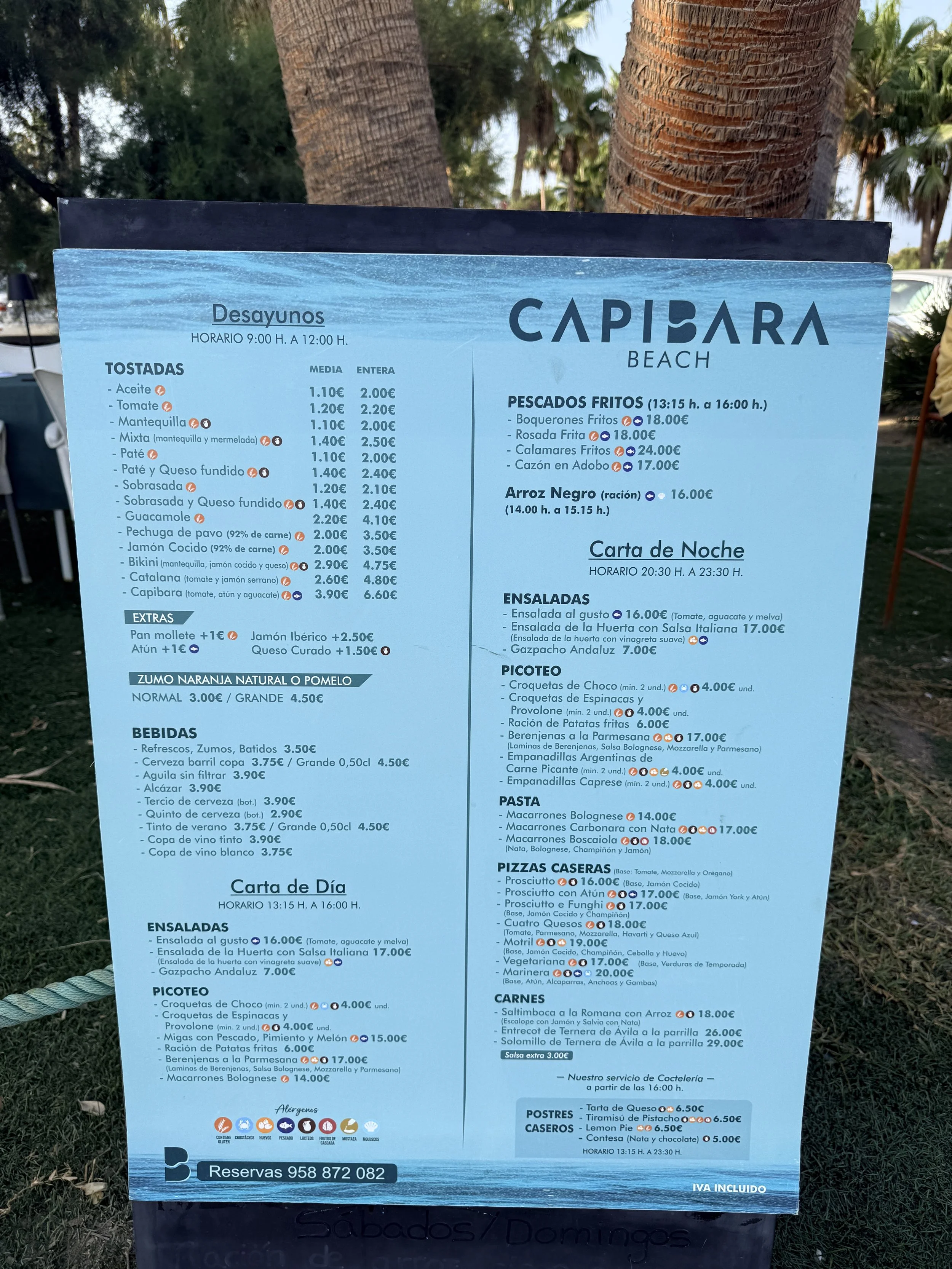
Capibara Beach Restaurant.
Playa de Granada
This is our nearest beach, and it is to here we head when we just want a day off, close to a chiringuito (beach bar), and where we can hire sun-beds for the day. There’s something delightfully low-key, but smart about Playa de Granada, probably due to the fact that the Belgian Royal Family had a summer house built here in the 1960s. Villa Astrida is right on the beach, and is one of the reasons why there are no high-rise developments in the vicinity. There is also a very good golf club here, giving the area a certain level of respectability! Everywhere is busy in August, but if you arrive in the morning you can still find a place to park right beside the beach and just settle down for the day. As the afternoon wears on, the vibe gradually changes and the daytime sun-worshippers disperse to be replaced by a younger crowd. The music volume increases and people queue to get into Badia Club for a night under the stars.
Calahonda
Not to be confused with Sitio de Calahonda which lies between Fuengirola and Marbella, this is a very different kettle of fish. We have been here a number of times, and we’ve visited different parts of the beach, but recently we nipped down for lunch after an appointment in Gualchos. We were able to park right outside a fabulous chiringuito and had a deliciously relaxed meal looking at the little boats bobbing in the naturally sheltered curve of the cliff. We’ve returned several times, and it’s not lost any of that initial allure. The water is crystal clear, and during the summer there is a lively buzz of activity without its ever becoming overbearing or unpleasant. It’s a traditional village on the beach, but surprisingly it is home to what many consider to be one of the finest restaurants on the Costa Tropical. El Conjuro is Michelin Recommended, and it’s in a wonderful location on the beach. We’ve not yet been, but it is high on our list!
La Mamola
If you want low-key, then La Mamola is the perfect destination. Friends of ours had recommended La Mamola as a place to have lunch, in the Restaurante Onteniente, and we have been twice. On one of those days, we hit market day and the promenade beside the beach had stalls selling excellent local produce, all set against the backdrop of the Mediterranean Sea. How perfect! The village is a long, coastal strip with no obtrusive development. We’ve not seen if there are any sun-beds available, yet; this is much more of a towel-and-umbrella sort of place but it’s remarkably hidden-away.
Castillo de Baños
I have included this beach, as the drive from Castell de Ferro is lovely. The coast road descends to right beside the sea and then through a short tunnel in the cliff. The village of Castillo de Baños is really nothing more than a hamlet, but it does have a long beach just next door. This is definitely a bring-everything-with-you beach, as amenities are thin on the ground.
Playa de la Rijana
The Spanish love this cove. It is easy to see why, as it’s nestled beneath the cliffs and the rocks jut out into the turquoise sea. The car park is beside the main road and then you have to walk down a track, under the road, to the beach itself, and during the summer people do tend to come in their droves. I was slightly put off by this beach on a previous visit, as I had an altercation with some waves. I was knocked over and in my attempts to get back on my feet, the persistent waves managed to drag my swimming shorts down to an indecent level. I haven’t yet lived it down.
Castell de Ferro
Last in this short list is the beach at Castell de Ferro that includes Playa del Sotillo (friends of ours loved this stretch of beach) and the Playa Cambriles-Lújar. We have always tended to gravitate towards Mare Nostrum, a great restaurant in the centre of Castell, right on the beach. Again, there is something charmingly old-fashioned about Castell. It is, after all, a working town rather than a tarnished resort and it is lovely for that very reason.
This is by no means a definitive list; it is a list of our favoured spots on that stretch of coastline running east from Motril and past Castell de Ferro. It’s a very different side of the Mediterranean coast, and hopefully one that is in no danger of the sort of mass development that has so defined the neighbouring Costa del Sol.