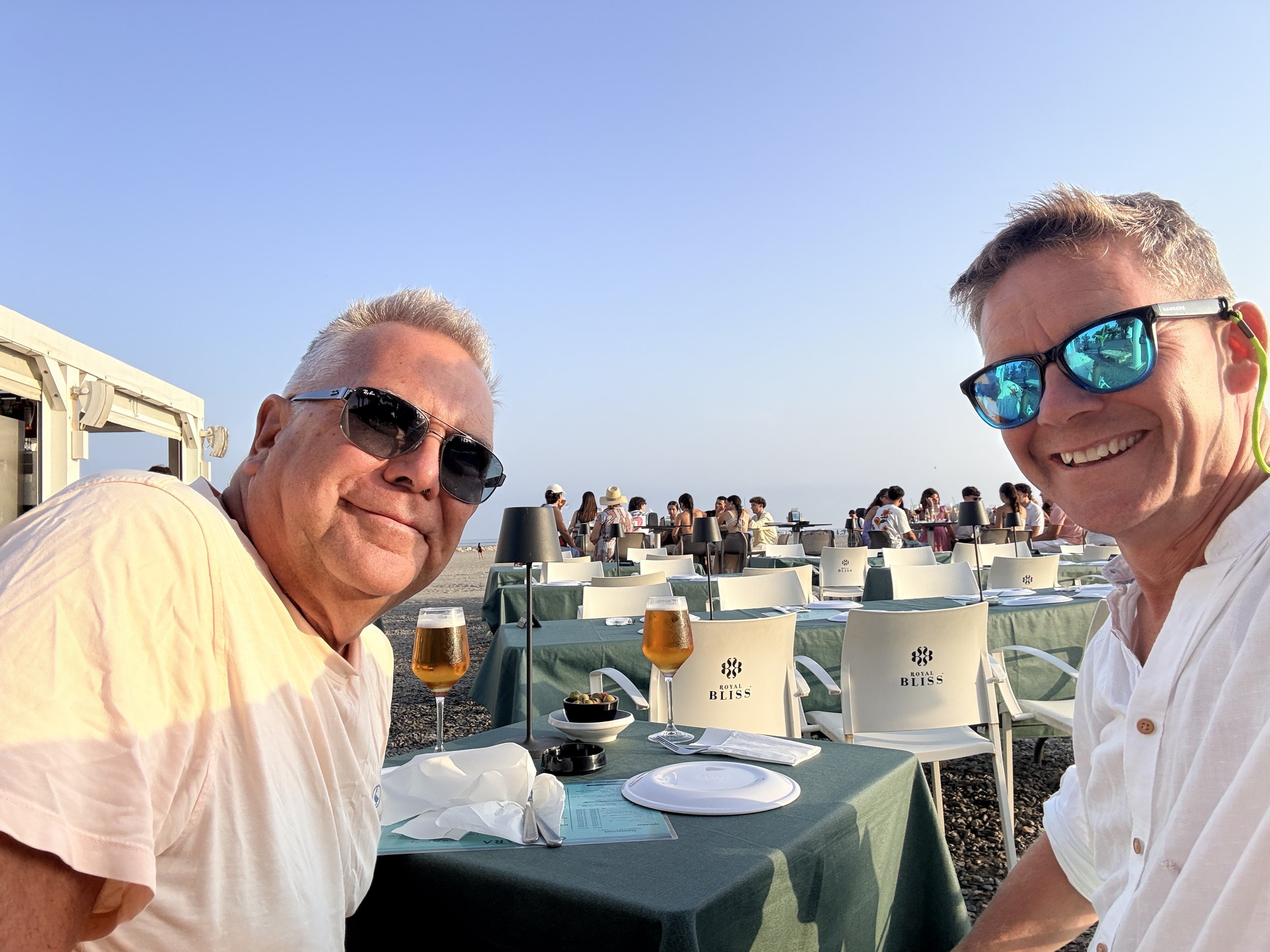
Summer
This has been a strange old year, weather-wise.
We had a huge amount of rain over the winter, for the first time in many years. As a result, reservoirs across Andalucia have been full to over-flowing and the Sierra Nevada had 4 metres of snow on the upper slopes - the best ski conditions of anywhere in Europe!
Now we are in summer, and we have had the usual heat waves. These heat waves, for the past couple of years, seem to have either been longer in duration or more frequent. We have had a couple of heatwaves with temperatures exceeding 40 degrees, made more oppressive by the Calima, the dust from the Sahara.
This year, it has been interesting to see what has been happening across Europe, and the forest fires have been very distressing. I say interesting, because prolonged heatwaves in northern Europe are not usual; in southern Europe they are. Forest fires, wherever they are, are dreadful. The most harrowing of this year’s fires must be that that claimed the lives of some 14 local people near the village of Los Gollardos. It is a very sad fact that round 95% of forest fires are the result of human activity, whether this be accidental or deliberate. The devastation, in terms of loss of life and natural habitats, is difficult to comprehend.
I’m not going to enter into a debate on climate change and the part that this may or may not have on this year’s unusual weather patterns; I will leave that to scientists. However, I do want to talk a little about how we cope in high temperatures here in Andalucia.
The Spanish are obsessed by the weather, and weather forecasts on TV are almost a programme in their own right. In the winter, our neighbours frequently exclaim “¡Que frio!” and in summer, “¡Que calor!”, as if cold and hot weather is unusual. It is always cold in the winter and it is always hot in the summer. Houses are designed to keep the heat out during the summer and the warmth in (sort of!) during the winter. Generally, the thick walls do create a cave-like coolness inside during the summer months. In winter, families tend to gather in one room, huddled beside a roaring wood-burner or open fire.
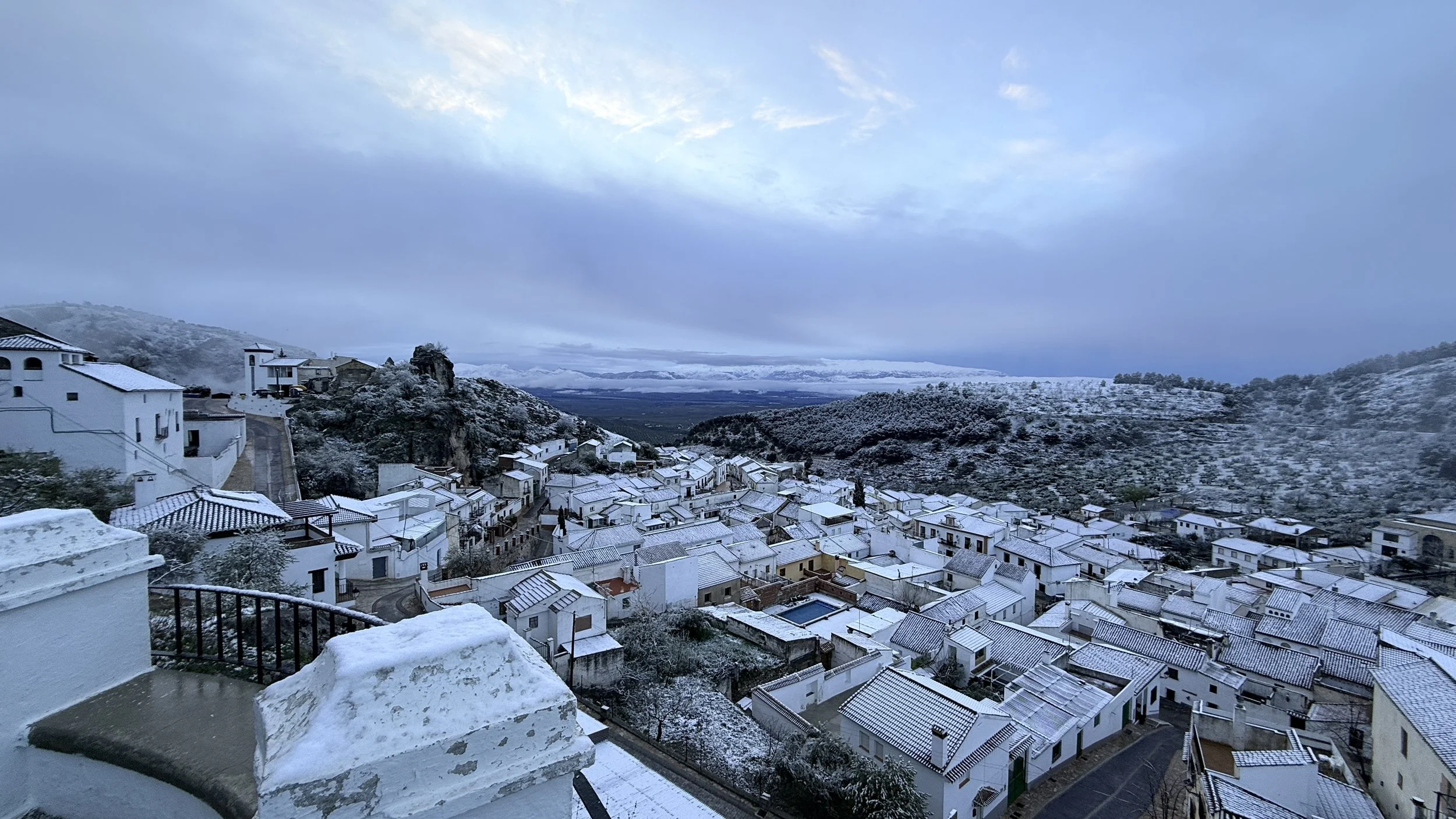
Moclin in March 2026
These design features go back centuries, as southern Spain is a hot region, and inhabitants have learned how to cope with the heat. I’m not saying that northern Europeans should all suddenly adopt the lifestyle of the southern Europeans, but a few lessons could be learned.
The people of Andalucia have lived for centuries without air-conditioning. The Moors designed palaces like the Alhambra to capture cooling winds and ever-present water to make their living quarters comfortable. Cave houses are still a popular choice, and these beneath-ground dwellings maintain a comfortable and even temperature, whatever the season. Obviously, now air-conditioning does exist and most apartments and houses in cities (Granada, Sevilla and Córdoba especially) have air-con installed, or life would be pretty unbearable.
Building design aside, it is the way that we live in Spain that takes account of the climate. In London, hot summers are grim. When temperatures rise, so too does the humidity and everything feels sticky and oppressive. Despite the heat, Londoners still travel to work in the most ghastly conditions: train and bus air-con struggles, if it is present at all; the London underground is, to my mind, the closest earthly approximation of hell. Most modern offices have air-con, but not all, and yet UK employees still work their 8 hours during the hottest time of the day.
The Andalucian routine is designed around the heat.
If you have anything to do outside, the morning is the only time to get it done, as the temperatures are relatively comfortable, and businesses are open to cater for the early-risers.
08:00 - 13:00, time for nipping to the shops, bank, meetings etc.
From lunchtime until early evening, don’t even attempt to do anything outside; hide in an air-conditioned office or take a siesta. This is essential! For a leisurely lunch, most Spanish people will seek the comfort of the interiors of bars and restaurants, leaving the sun-baked terraces for the tourists. We love Granada in the summer as many of the Granadinos leave the city for the cooler temperatures of the mountains and the coasts. The city centre is devoid of crowds and only tourists meander languidly through the streets. It’s easy to park, there’s no need to book a table at a restaurant and the city pursues its summer season of culture at a very leisurely pace.

The other night, as an example, we went to the annual Lorca festival at the open air theatre in the Alhambra. This is always a summer treat. We drove into the city centre at around 19:00, parked seamlessly and then found a wine bar in Calle Ángel Ganivet for a drink. The cloistered terrace was in the shade, away from the still fierce sun, but the temperatures were comfortable. In the summer heat, an ice-cold beer is the best thing you could ever taste, and you learn to decelerate the pace; it’s too hot to rush.
Concerts in the summer never start before 22:00. People generally don’t go out to dine until 22:00. Why would they? Work was done in the morning, the hottest hours of the day (14:00 - 19:00) were dealt with either in a cool, darkened room or in an air-conditioned office, and once the sun starts to set, it’s time to get out and about once again.
I suppose my conclusion to all this is that you can’t beat the weather. Hot countries have adapted their way of life to respect and work with the weather, not fight it. The sun isn’t going anywhere, neither is the rain or sub-zero temperatures. Spain is leading a way to work with the climate to become more energy efficient, developing renewable energy infrastructures at an impressive rate: by 2030, the target is to generate 81% of electricity through renewables (wind turbines, solar and photovoltaic). This is working with and respecting the climate. Water management is also high on the agenda, as the country suffers from long periods of drought. The way of life has already adapted to extreme temperatures, and will continue to do so, but that is part of the absolute joy of living here. After years of living in the UK, moaning about the grey skies and rain, and then moaning that it’s too hot when there is a rare hot summer, we now moan less. We still, like the Spanish, love to express our disbelief that summer is, yet again and unsurprisingly, hot and that winter is cold. In reality, we love the seasons here: the fresh greens and pastels of Spring, the long-lasting golden palette of Autumn, the chilly and crisp days of Winter and the glorious, night-party filled long days of summer. Adapt to the sensible ways of life that have been carved out over centuries and you may understand why so many people in Mediterranean countries live to be 100 + years old. 100 years of exclaiming ¡Que Calor! as soon as the winter clothes have been stored away.
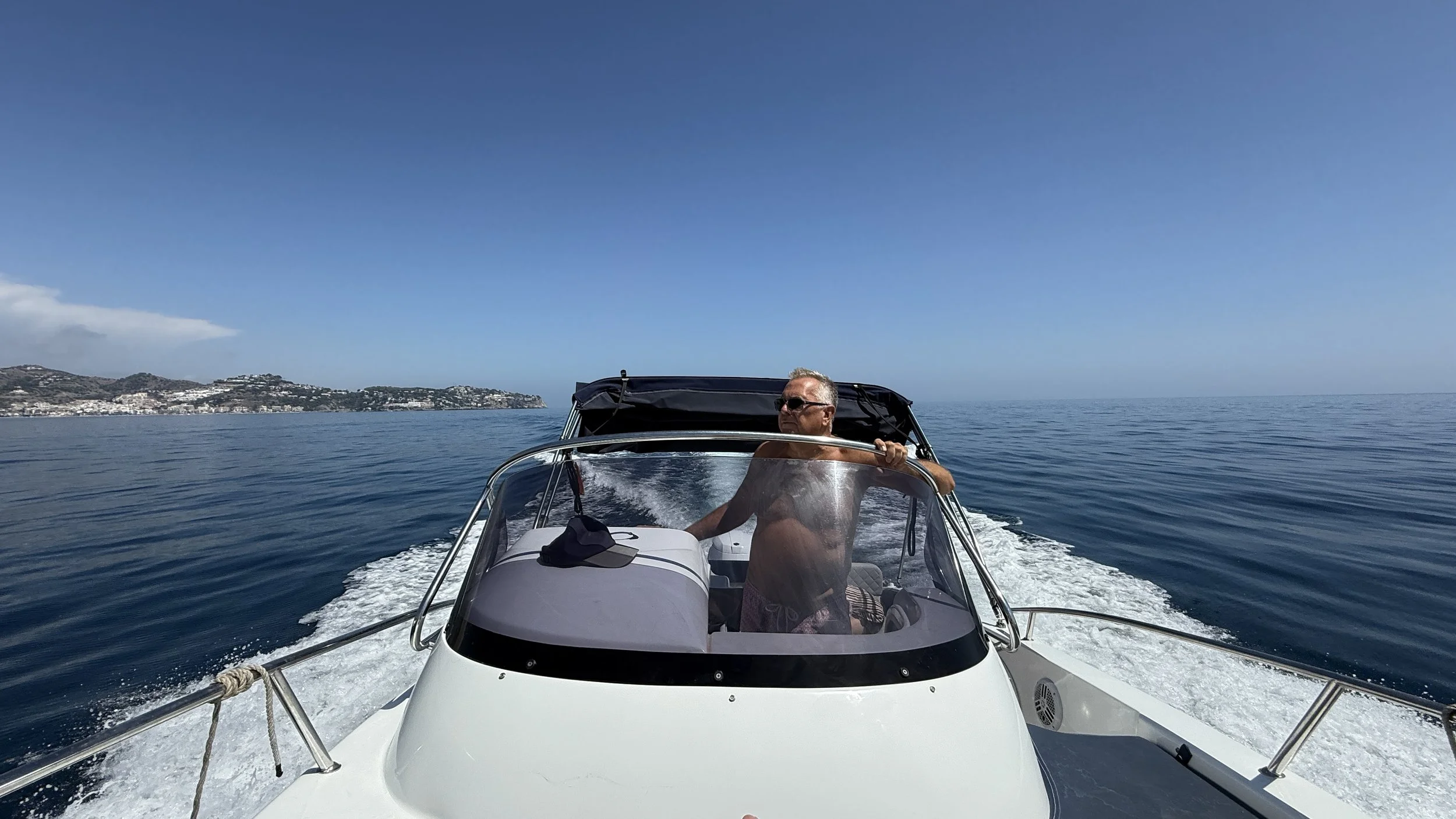
Our preferred way to cool off in the Summer. Yes, That’s Captain Rutter!